WISMAR WOMAN
A PERFORMANCE PHOTOGRAPHY COLLECTION
BY MIRANDA RACHEL DEEBRAH

An Homage to Ancestors
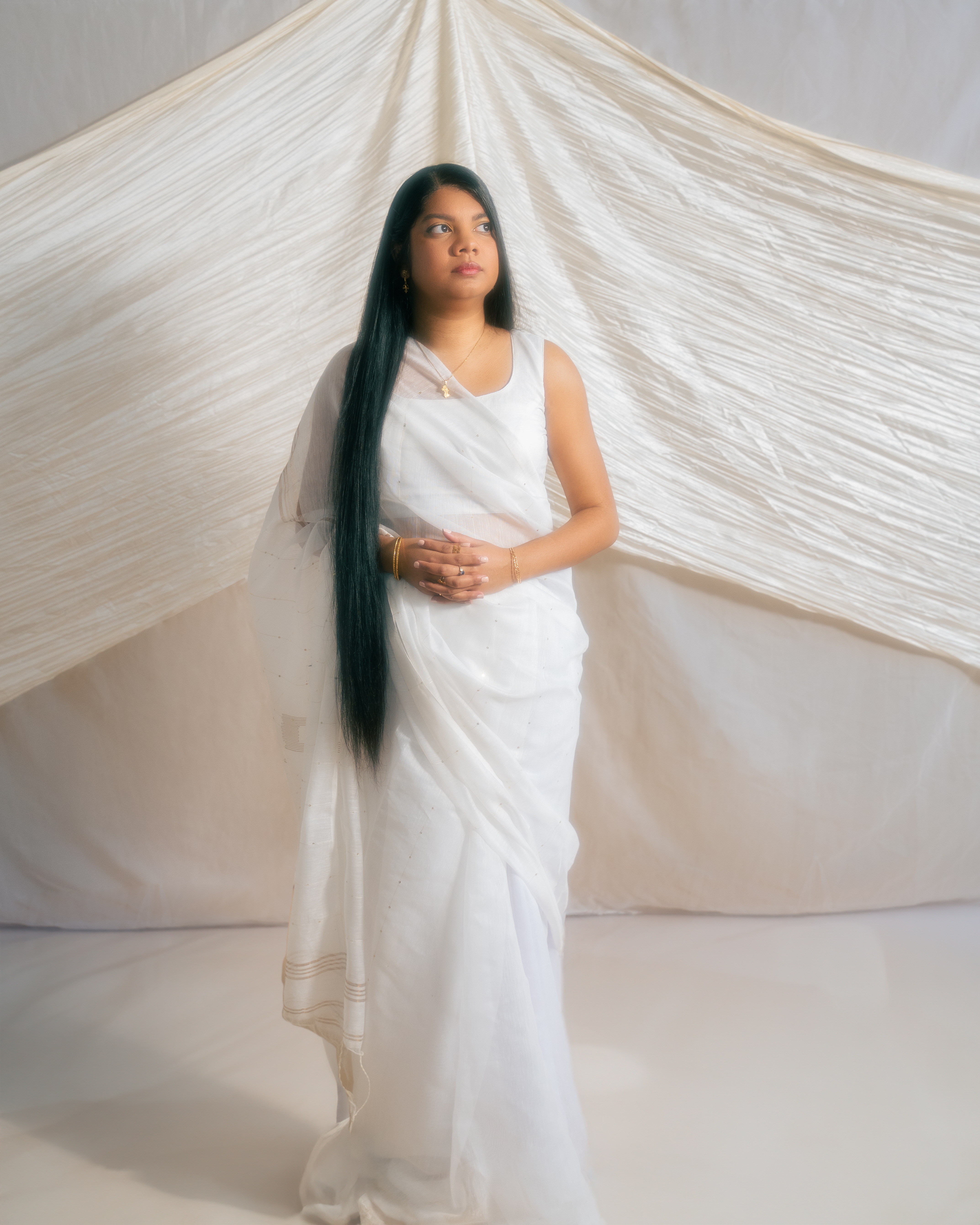
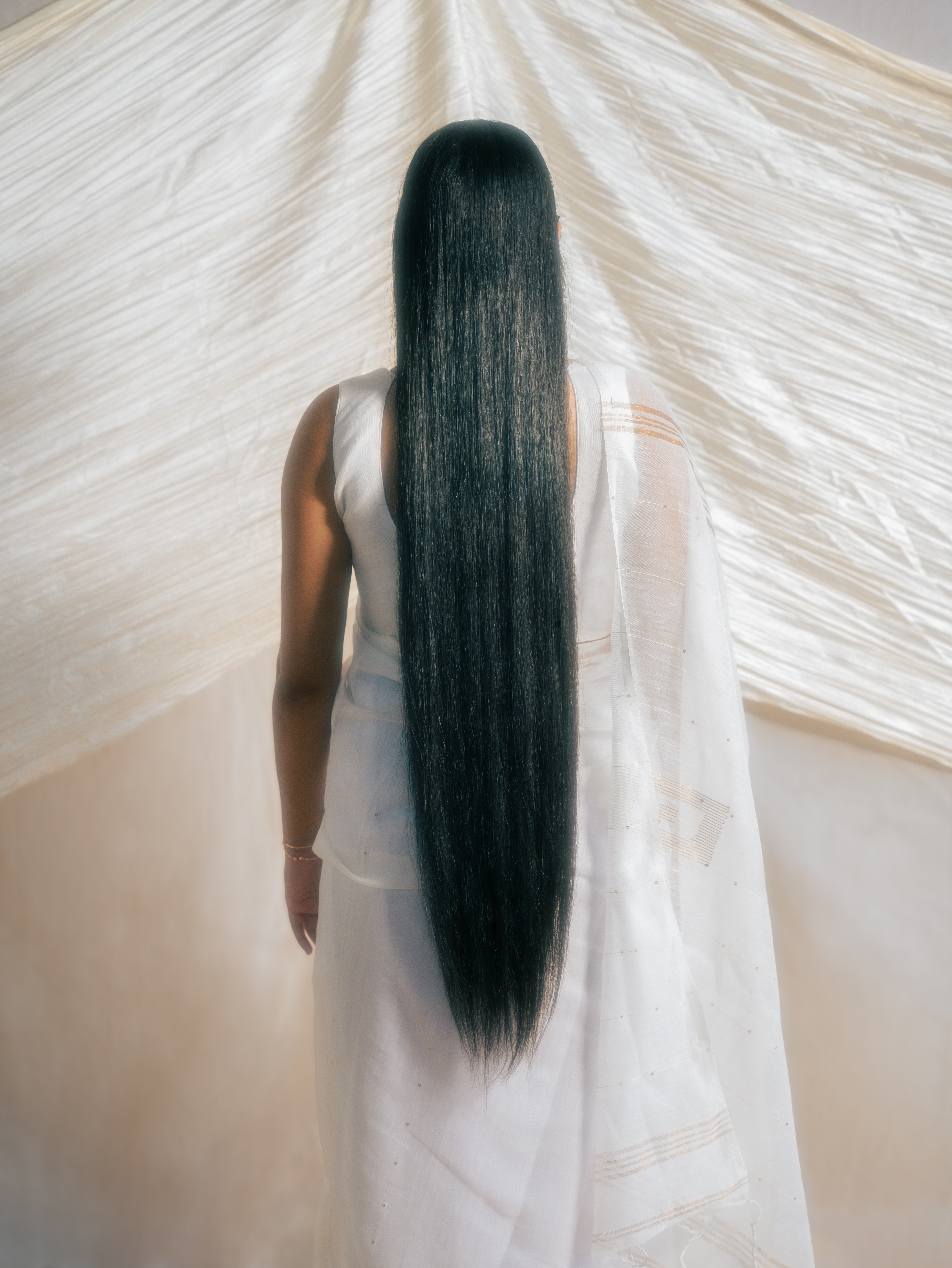
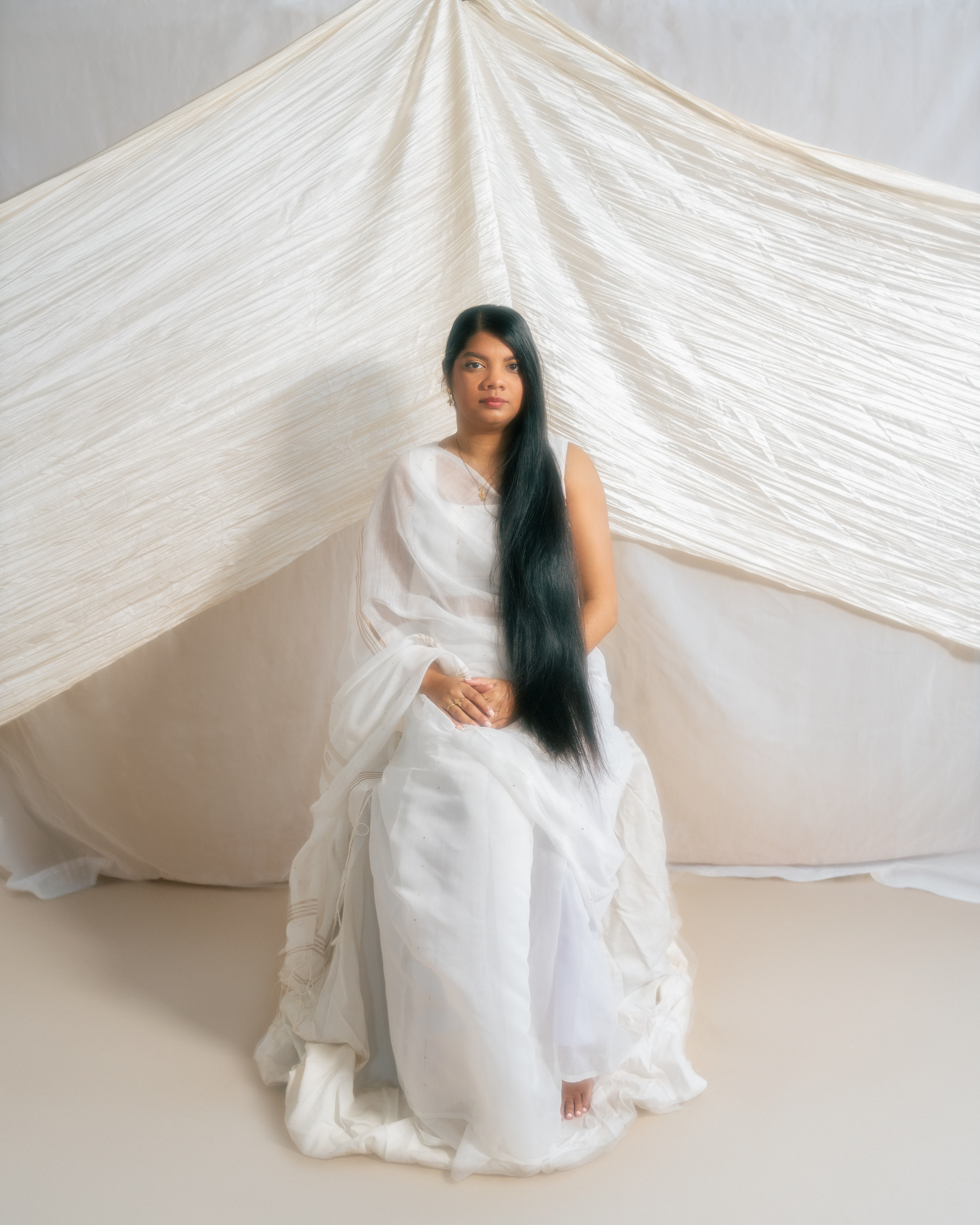
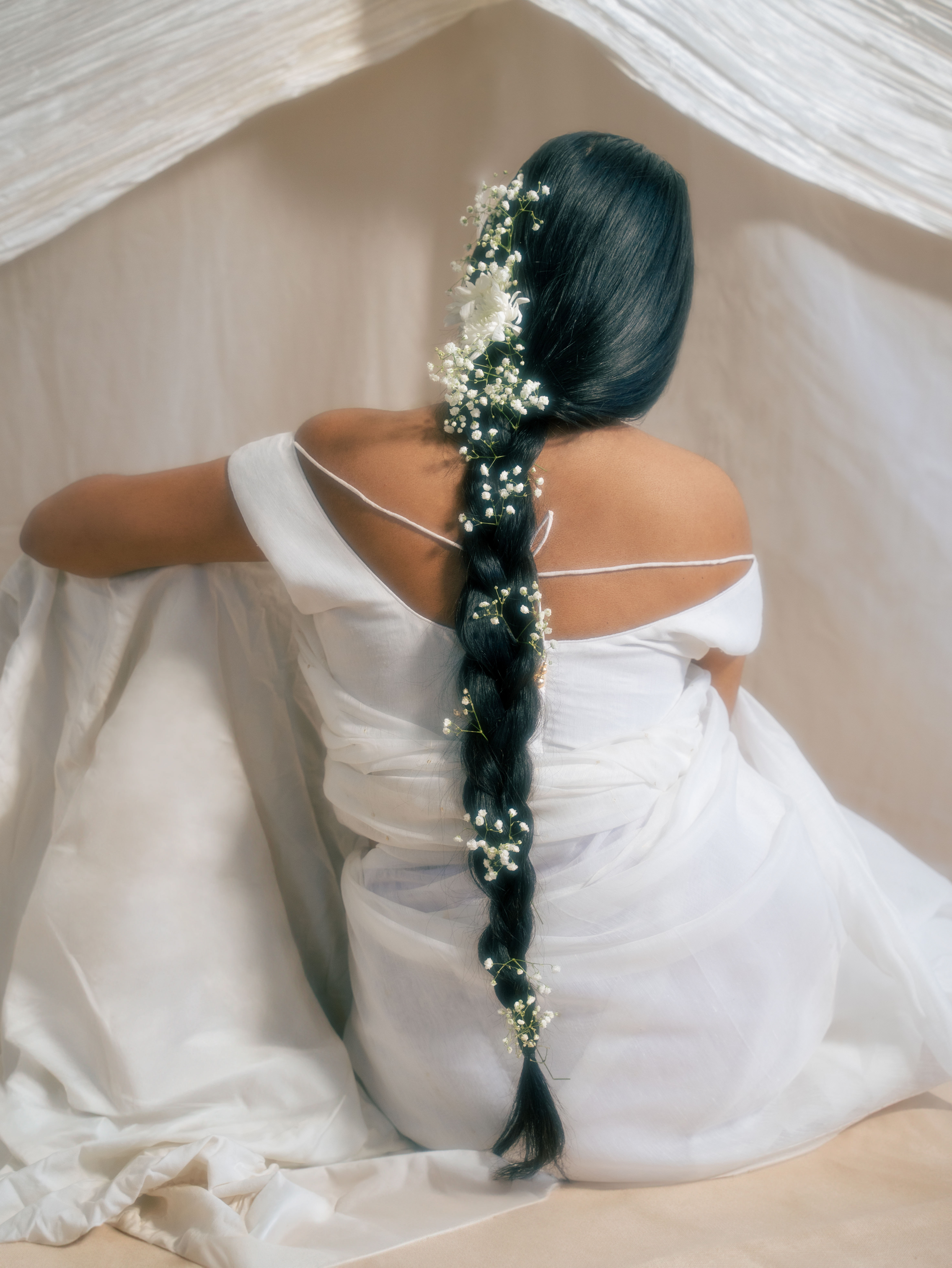
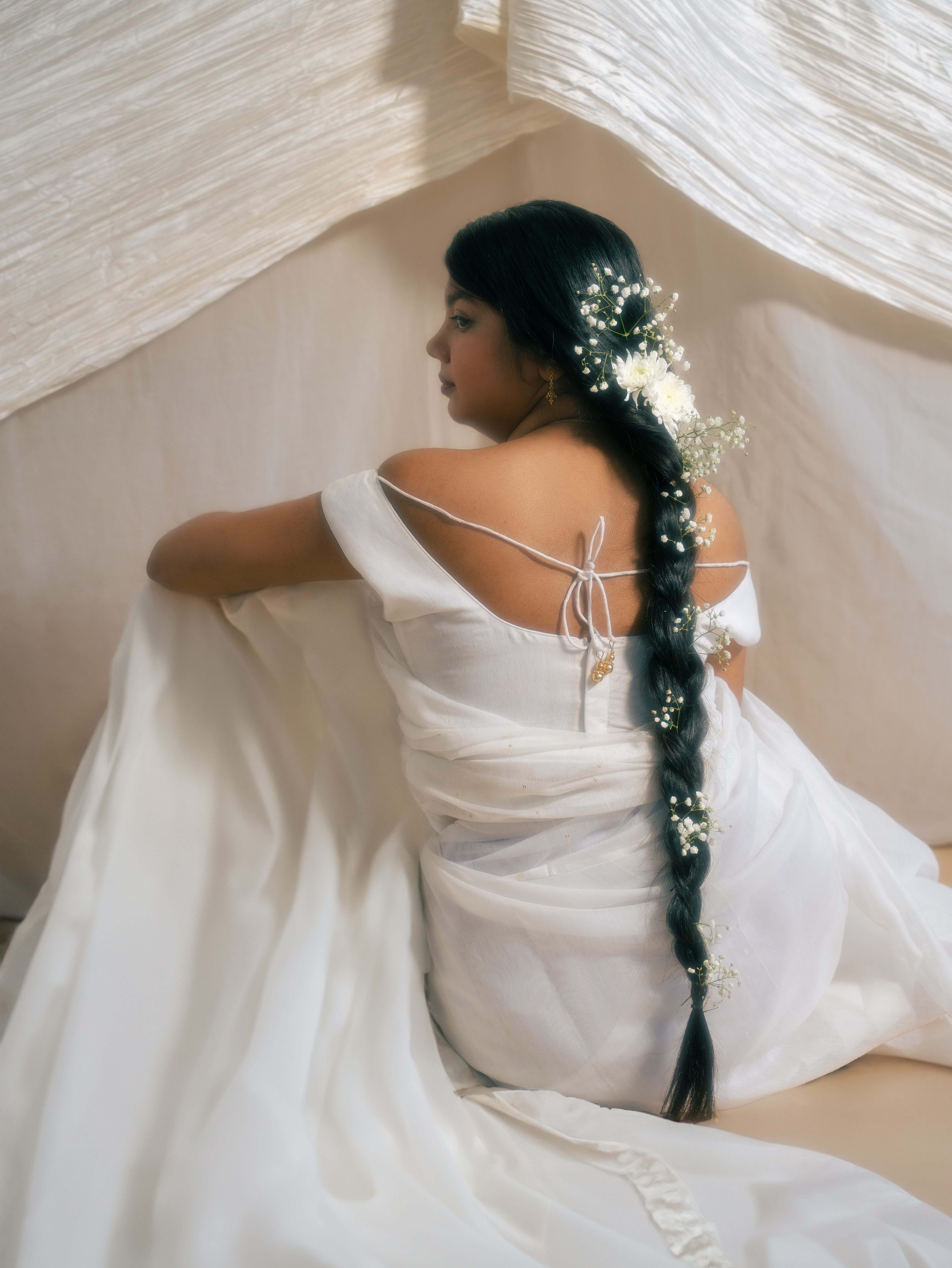
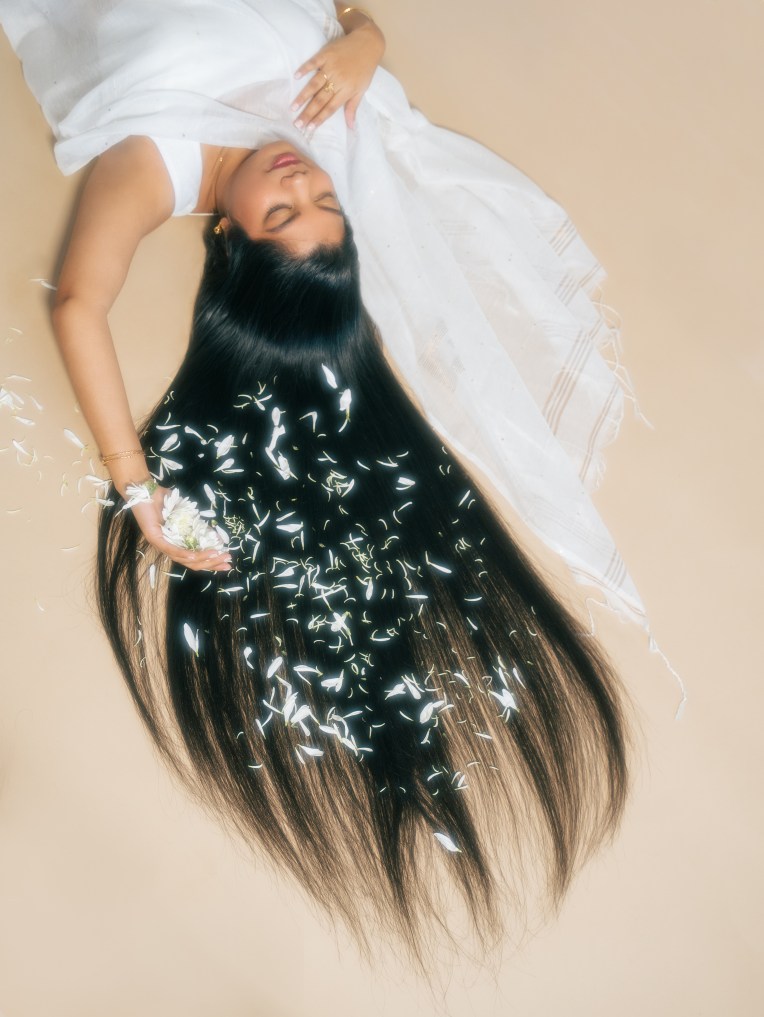
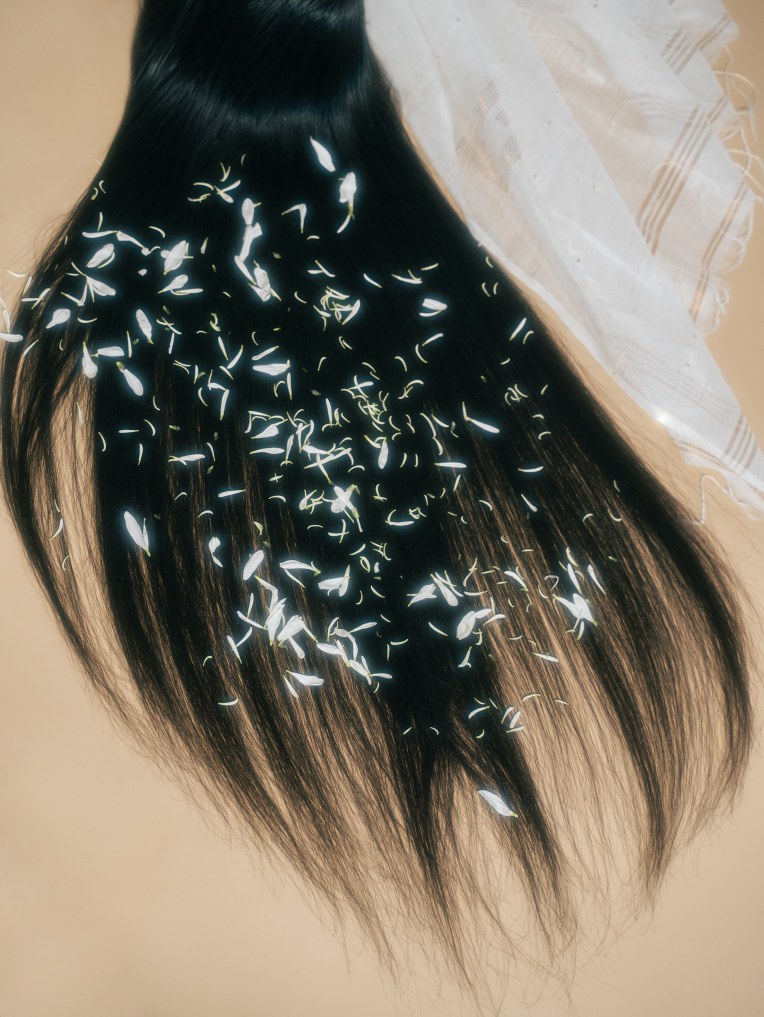
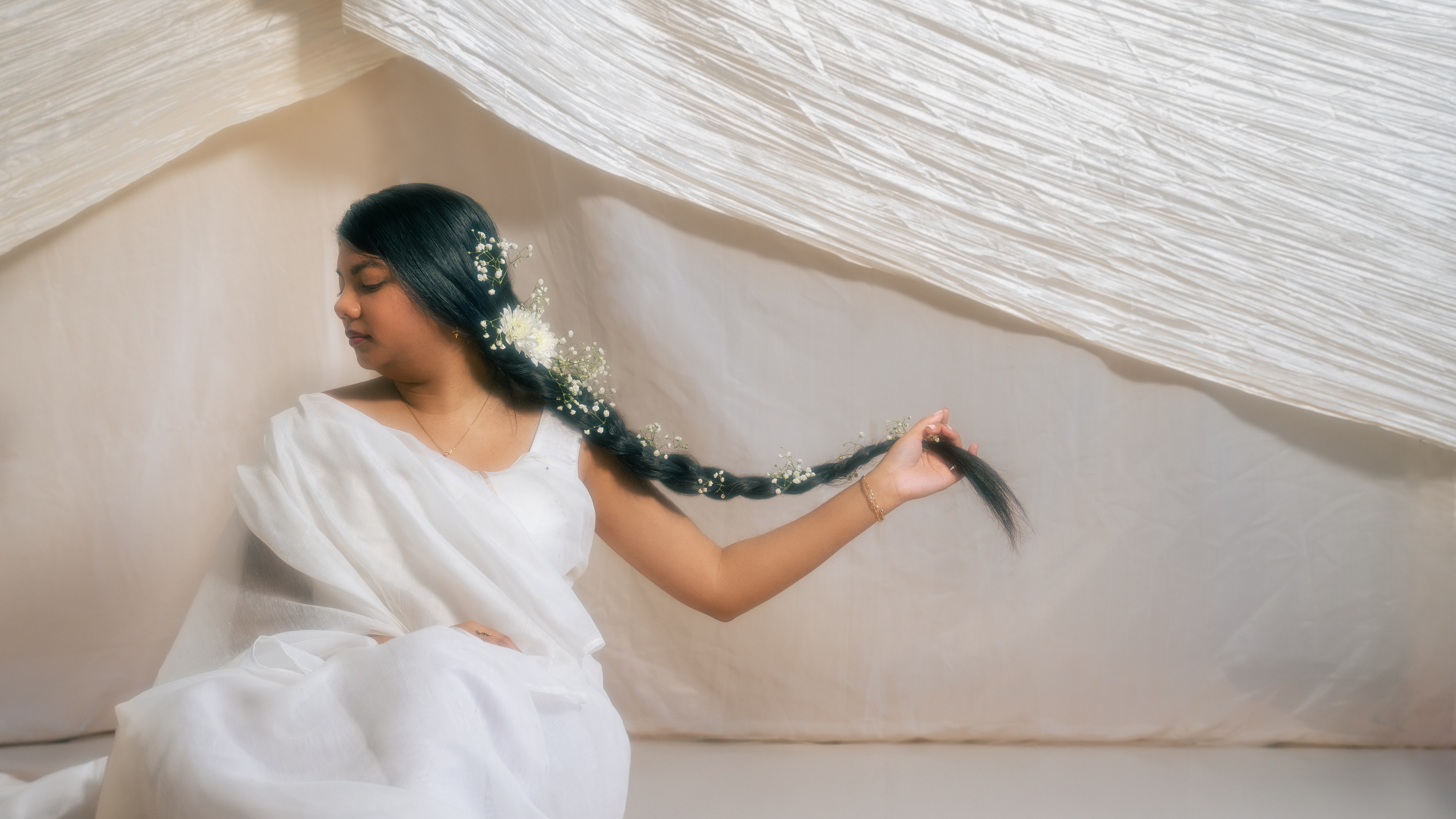
“Wismar Woman” is a performance photography collection commemorating the 60th anniversary of the Wismar Massacre in Guyana. Its central focus is my hair at its length as of Spring 2024 — cascading down my back at slightly over 40 inches long — which I committed to growing intentionally since 2021 upon learning more about this tragic event in Indo-Caribbean and Guyanese history during Jahajee Sisters’ Leadership and Empowerment Institute program.
From May 24-26, 1964, thousands of Indo-Guyanese in the villages of Wismar and Christianburg were subjected to targeted violence and victimized in horrific acts of ethnic cleansing fueled by anti-Indian sentiment. During the workshop, Guyanese scholar and author of “Far from Mecca: Globalizing the Muslim Caribbean” (2020) Dr. Aliyah Khan shared a little known anecdote about these events based on her mother’s firsthand account of meeting the survivors who sought refuge in her family’s masjid, noting the fact that many women and girls had their hair cut off during the massacre as a way to further demean and violate them in multiple acts of gender-based violence.


The deliberate act of forcibly removing their hair was with the intent to degrade and shame them, a means of diminishing any self-worth tied to ethnic and cultural identity which their hair represented during Indian girlhood and womanhood.
Learning about this aspect deeply moved me as a survivor of violence who finds beauty, strength, and cultural pride in my own hair. It inspired me to grow my hair as long as I could in an act of solidarity and reclamation in the name of the souls who had theirs stolen from them. And in honour of all those fallen and those who survived. This is the longest my hair has ever been in my life and every day of its growth for the last 2 ½ years, I have kept the memory of all the victims and survivors of Wismar alive in my heart and soul.
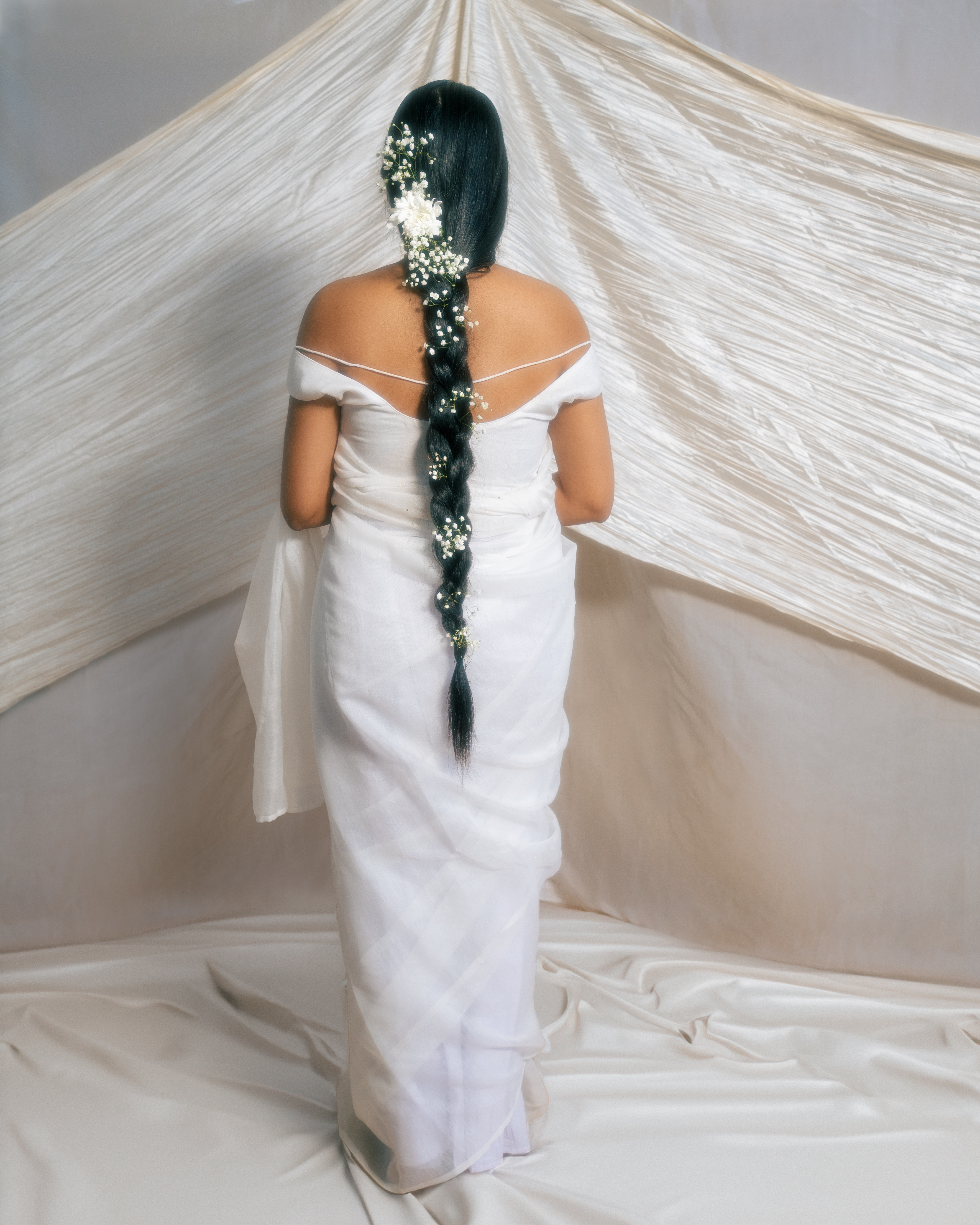
As a firm believer that art is a powerful means of healing, this creative endeavour arose as a means to foster healing from the trauma of this collective intergenerational wound. Through the use of myself as an extension of our diaspora, I pay homage to our Wismar ancestors and uplift them in a tribute of the beauty and strength of cultural identity, “coolitude”, and Indian womanhood.


Finding Healing
I hope to share this personal undertaking with the wider community and diaspora to educate further about the history of Wismar which is often glossed over and goes unacknowledged, even as we commemorate Indian Arrival/Survival Month and Guyana’s independence anniversary every year in May.
The depth of trauma keeps us from talking openly about tragic events like this. Our elders understandably find it difficult to remember and speak about Wismar, instead burying the past in an effort to move forward from the pain inflicted upon our people.
That is not to say Indians were without fault in the strife, further fueling racial tensions with counterattacks and retaliation rooted in anti-Blackness. This is undoubtedly a complex and painful history in which the involved parties hold their own share of culpability in contributing to causing harm and violence against each other. Addressing this adequately requires a delicate, nuanced, and intersectional approach.

What is essential to remember is the fact that the political and ethnic division between Afro and Indo Guyanese was deliberately stoked by imperial forces in the US and UK, the age-old colonial tactic of divide and conquer in full effect, successful in its intended purpose, and damaging to both groups even now.
It makes healing from this across racial and ethnic divides all the more imperative. We have caused harm and have been harmed. As a healer, it is my belief that we should collectively acknowledge and address the dark underbelly of our history in our pursuit of healing, unity, peace, and ultimately our liberation.
This art piece is my personal effort to do so, remembering the people of Wismar with deepest reverence. My hope is for this project to serve as a reminder that this tragedy happened to our people, shed light on a little known fact about this history, and prevent its erasure from our historical narrative lest it become a lost and hidden story for future generations to come. And so I dedicate this to my ancestors, to the people of Wismar, to the global diaspora descended from Indian Indenture, and to peoples around the world presently experiencing acts of genocide, yet fiercely standing strong in their sovereignty. May we all one day be free.
Learn more about this project at Brown Gyal Diary.
With heartfelt and endless gratitude to:
Photographer/Creative Director: Leeanna Hariprashad
Set Assistant: Shivane Chandool
Hair & Makeup Artists: Natalie Contrera & Taijae’ Southwell
Artistic Advisor: Gabrielle Francis
Creative Support: Leann R. Deebrah, Sarah Asenath
Historical Consult: Aliyah Khan, PhD
 Miranda Rachel